

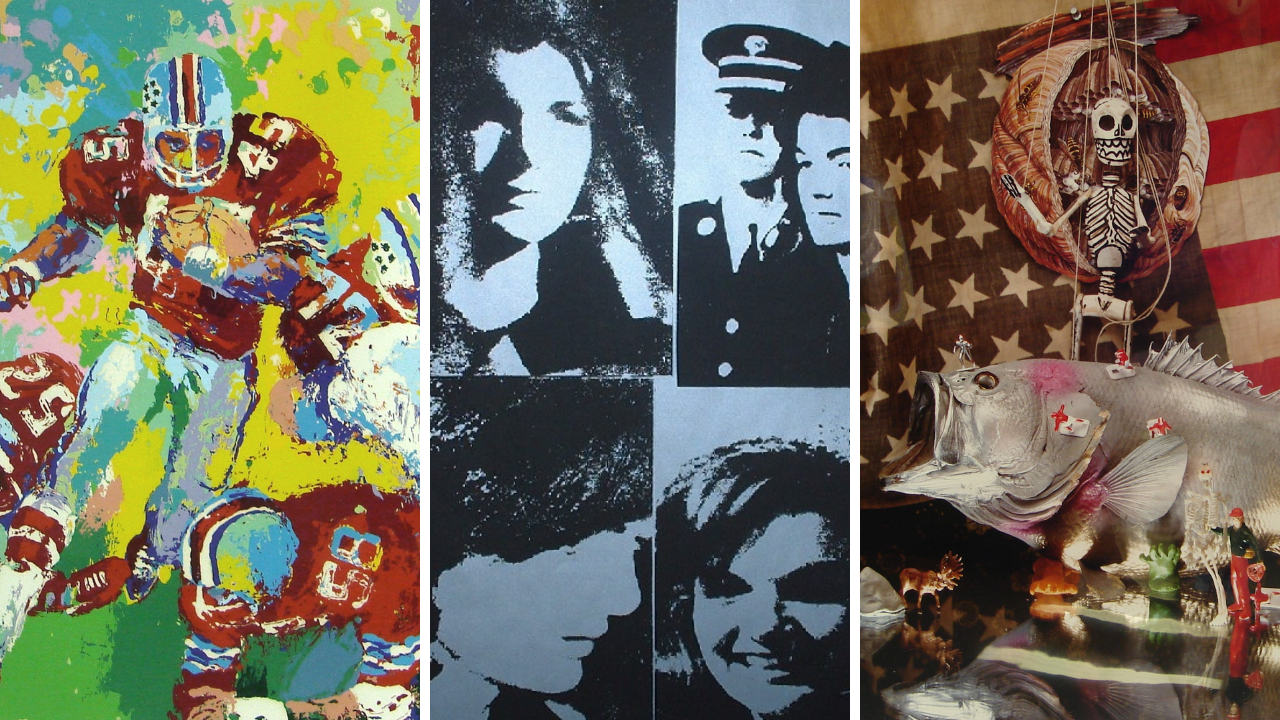
USA250: Celebrating the American Vision
March 2, 2026–January 10, 2027
As CAM’s longtime Registrar, Mary Helen Miskuly knows the museum’s collection inside and out. For USA250: Celebrating the American Vision, she stepped into the role of guest curator—drawing from decades of close care and observation to shape an exhibition that reflects on America’s identity, contradictions, and visual legacy. We sat down with Mary Helen to learn more about her curatorial approach and the stories this collection continues to tell.
Castellani Art Museum: As CAM’s registrar, you have a uniquely intimate relationship with the collection. How did that shape your curatorial process?
Mary Helen Miskuly: I’m with the artwork every day, so I start to see connections—visual, thematic, historical—that grow over time. I make note of where these relationships form and keep track of recurring themes.
CAM: What kinds of narratives or visual threads began to emerge as you selected works from the collection?
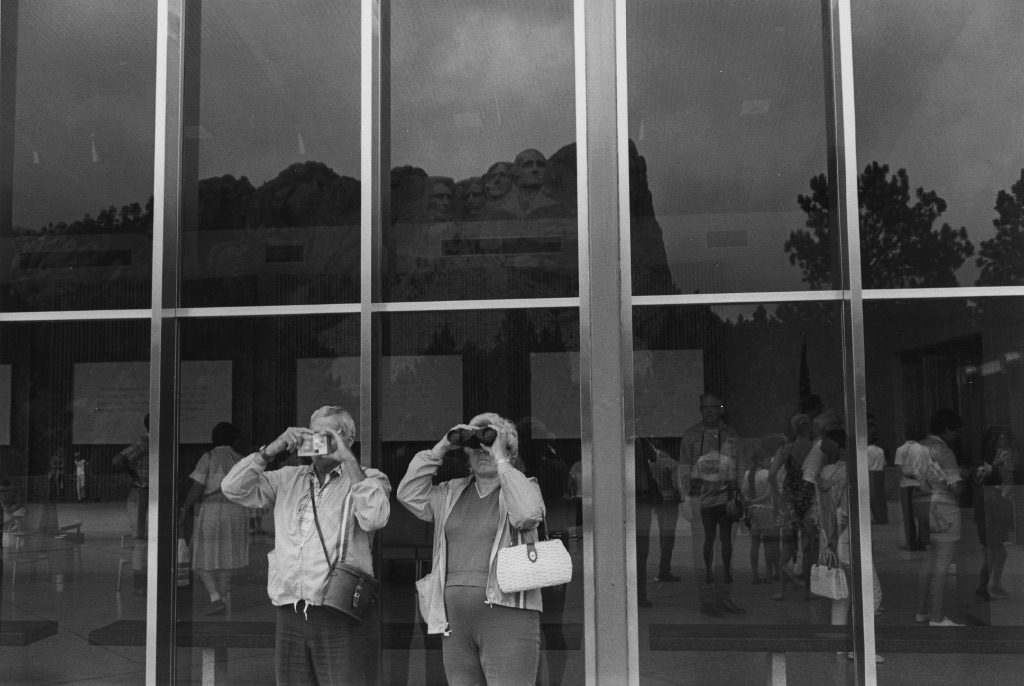
Lee Friedlander, Mt. Rushmore, n.d., black and white photograph, Gift of Robert Freidus, 2019
MHM: One thread connecting both Michael Beam’s selections and mine is humor. In a time when levity goes a long way, two works stood out. Lee Friedlander’s photograph of people viewing Mount Rushmore captures subjects unaware they’re being photographed. They aren’t outside looking up — they’re indoors, and the monument appears only as a reflection. Without the title, it could read as just another black-and-white image. Because it exists in collections across the country, it feels familiar and relatable; travel, sightseeing, and visiting national parks are all part of the American experience.
The other piece that struck me was Mike’s selection, Apollo Jest by Jim Pomeroy. Created in 1983 — the same year The “Right Stuff” was released — the work predates the internet yet connects to ongoing debates about the Apollo landing. Its humor comes through snapshot-style imagery presented as official documentation. The red, white, and blue 3D process and bubblegum baseball card format, echoed by my inclusion of Jim Dow’s stadium photographs, add to its tone. Shown here as uncut sheets, the piece emphasizes collectability. It’s something I’ve seen in storage many times but hadn’t examined closely until now.
CAM: Were there any works that surprised you once you saw them in dialogue with one another in the gallery?
MHM: I often think about color relationships when laying out an exhibition, and initially, the palette felt somewhat plain. That changed when I considered the beaded doily by Rosemary Rickard Hill alongside the Kenny Scharf telephones.
I’m drawn to the vivid color in the doily and how it plays off the bold patterns of the phones. Both objects reference older forms, yet their vibrancy creates visual energy. I like the way the traditional doily “speaks” with the modern — or once-modern — telephone.
CAM: The artists represented in USA250 reflect a wide range of perspectives and experiences—but the exhibition also highlights the strength and diversity of CAM’s permanent collection. Can you speak to how this show celebrates the museum’s founding vision as well?
MHM: Armand Castellani wanted the museum to sit at the heart of campus, so students could easily engage with it. Art plays an important role in creating well-rounded individuals, and the museum offers a wide variety of work for a diverse student body to experience.
CAM: As the U.S. approaches its 250th anniversary, what do you hope visitors will reflect on after seeing this exhibition?
MHM: What we hope visitors take away is that the CAM holds an outstanding, hidden gem of a collection, with a little something for everyone. Art—and museums—don’t have to feel intimidating. We’ve embraced Andy Warhol’s idea that ‘Art is for Everyone,’ and we hope visitors leave feeling the same way.