

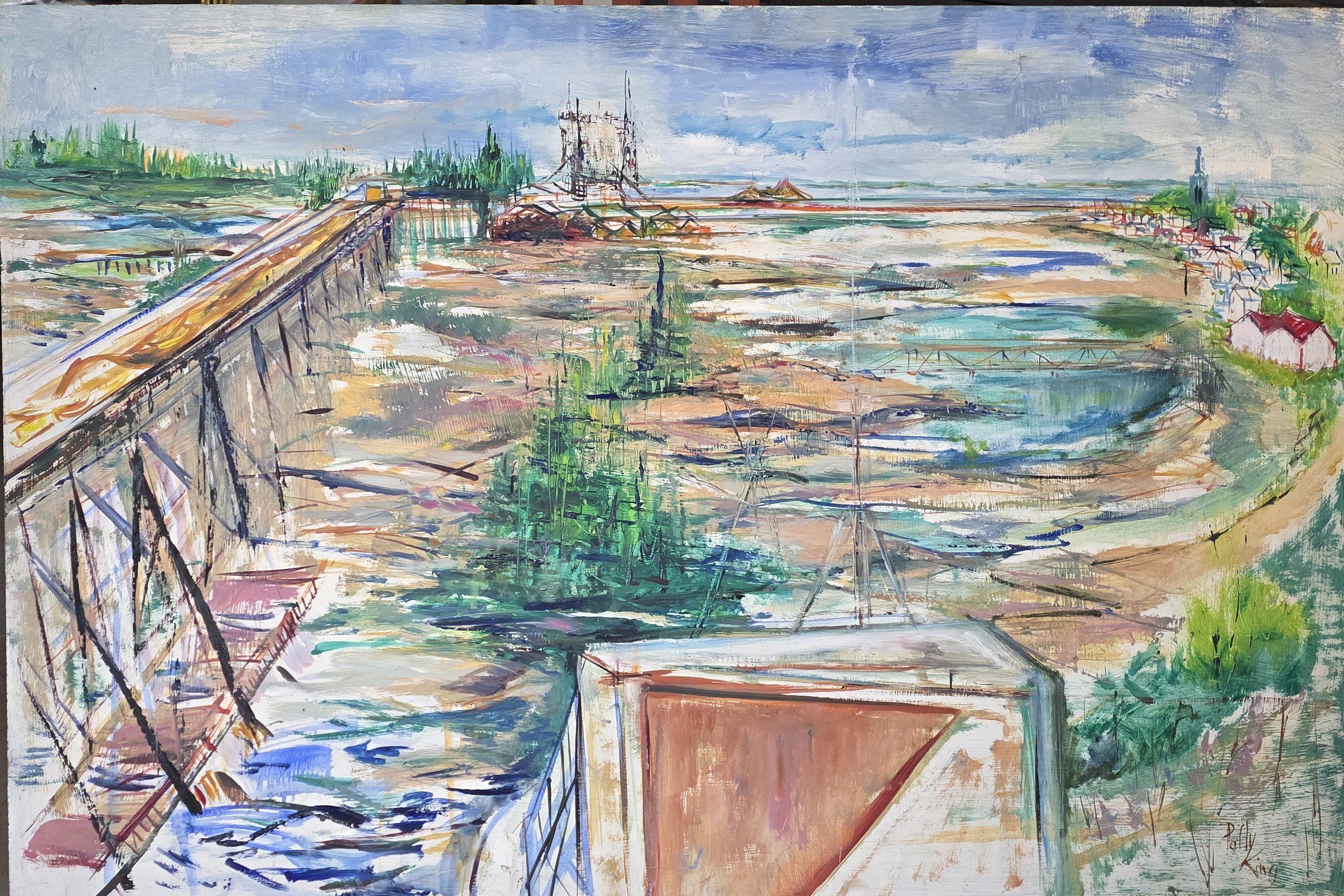
King of Power, Queen of Beauty
May 7, 2026–April 25, 2027
Essay by Hope L. Russell, Ph.D.
Director of Education and Interpretive Planning,
Historian Niagara Falls National Heritage Area
The Niagara Falls National Heritage Area is thirteen miles of endless wonder stretching from Niagara Falls to Old Fort Niagara in Youngstown. It follows the perpetual movement of the Niagara River as it flows above the cataracts, plunges over the 200-foot cascade of the Falls, and surges through the Class VI Whirlpool Rapids, through the lower Niagara River gorge, and into Lake Ontario. These landscapes are steeped in tremendous history and transformation; they are always moving, always changing. They, too, are Art in Motion.
Niagara Falls: King of Power, Queen of Beauty traces the transformation of Niagara Falls from an awe-inspiring natural wonder into an iconic landscape shaped by beauty, power, and the human imagination.
Co-curated by the Castellani Art Museum and the Niagara Falls National Heritage Area, this exhibition explores the dynamic interplay between the natural beauty and industrial power of Niagara Falls, as well as the ways in which beauty and power coexist in seemingly unlikely places.
As depicted in artworks by local artist Polly King, for example, beauty is found not only in her rendering of the majestic cataracts but also in her paintings of the Niagara Power Project and industrial scenes along Buffalo Avenue.
Other artists in the exhibition extend this theme by revealing how Niagara Falls has been continually reimagined across time—at once a natural wonder, engineered landscape, and cultural icon. Nineteenth-century prints by William James Bennett, Charles Bierstadt, and John Bornet, and works on loan from antique photography collectors Randall Gamby and Lorelei Barrett, emphasize the grandeur and seasonal beauty of the Falls.
These artworks often present an idealized and seemingly untouched landscape at familiar sites like Goat Island, Terrapin Point, and Table Rock. In contrast, the exhibition also highlights the human drive to harness and transform this environment through large-scale engineering projects such as the International Suspension Bridge, the Great Gorge Route, and the Niagara Power Project.
Together, these works illuminate how Niagara Falls exists in a constant tension and harmony, between preservation and transformation, between nature and industry, and ultimately between power and beauty.
A tourist recently remarked that one can walk past monuments without a second glance. But you cannot walk past Niagara Falls without being drawn into its presence and captivated by its power and beauty. This is the force of Art in Motion within the natural landscape. Encountering Niagara Falls is not simply spectacle nor only an expression of the American sublime; it is a shared human experience with scale, sound, and movement that resists indifference.
In that moment of recognition, awe becomes both personal and collective, reminding us that Niagara’s power is not only something we observe, but something we experience together. The exhibition, in turn, mirrors the same sense of shared awe, revealing how art can move us in ways that are immediate, immersive, and unforgettable like the Falls themselves.
About: The Niagara Falls National Heritage Area is one of 62 National Heritage Areas in the United States. Designated by the United States Congress in 2008, its mission is to preserve, protect and promote the historic, natural and cultural resources of the area stretching from Niagara Falls to Old Fort Niagara in Youngstown, New York. For more information, visit discoverniagara.org.
Artwork: Polly King, (detail) Niagara Power Project, c. late 1950s–early 1960s, watercolor, Courtesy of the Polly King Art Gallery